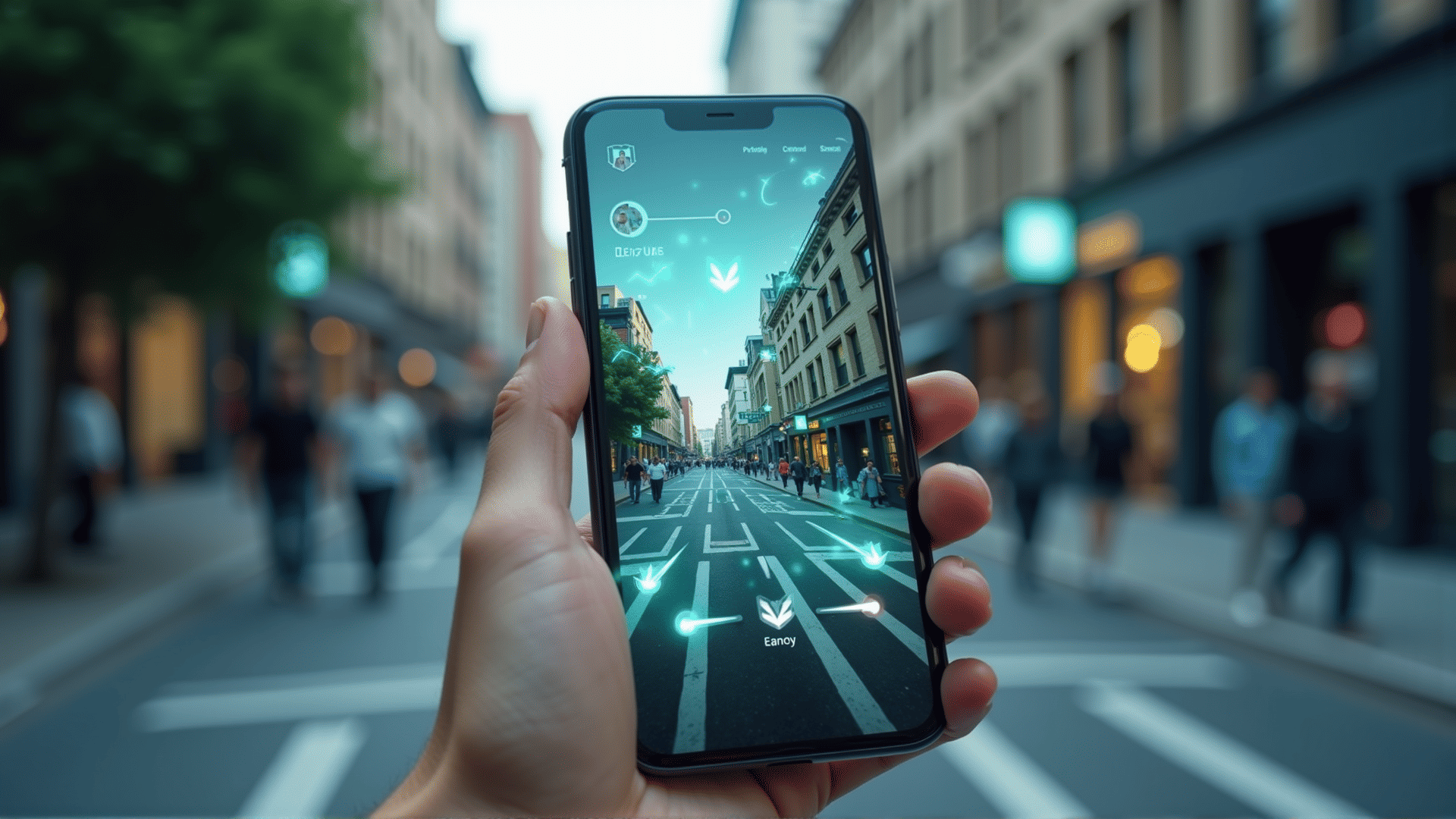
In the ever-evolving landscape of mobile technology, the user experience (UX) is undergoing a remarkable transformation, thanks to the integration of cutting-edge technologies like Augmented Reality (AR) and Artificial Intelligence (AI). As smartphones become increasingly central to our daily lives, these advancements are paving the way for apps that are not only more intuitive but also significantly more engaging.
Augmented Reality, a technology that overlays digital information in the real world, has been gaining traction across various industries. In the context of mobile UX, AR offers users a more immersive experience by seamlessly blending virtual elements with the physical environment. This capability has been particularly beneficial in areas such as retail, education, and gaming. For example, AR-powered apps allow users to visualize how furniture might look in their home before purchasing or enable students to explore interactive 3D models as part of their learning process. Such applications enhance user engagement by providing a richer context and a more personalized interaction with digital content.
On the other hand, Artificial Intelligence is playing a pivotal role in making mobile applications smarter and more responsive to user needs. AI algorithms, capable of processing vast amounts of data, are used to understand user behavior and preferences. This understanding allows apps to provide personalized recommendations, anticipate user needs, and automate routine tasks. Features like voice assistants, AI-driven chatbots, and predictive text input are all improving user interaction by making it more fluid and intuitive. Moreover, AI is enhancing security features with biometric authentication processes such as facial recognition and fingerprint scanning, adding an extra layer of safety while simplifying the user journey.
The combination of AR and AI within mobile applications holds the potential to redefine user engagement. A compelling example is the development of AI-powered AR navigation apps, which provide real-time, interactive directions layered over the physical world. Such applications not only facilitate easier navigation but also highlight points of interest, delivering valuable contextual information that enriches the travel experience.
Additionally, these technologies are democratizing access to information, making it more inclusive for individuals with different needs and preferences. AI's natural language processing is breaking down language barriers, while AR can aid people with disabilities by providing visual or auditory assistance that enhances their experience of the world.
The synergy of AR and AI is fostering a new era in mobile UX, where personalization, efficiency, and engagement are prioritized like never before. As companies continue to explore and harness these technologies, the potential for innovation seems boundless. The key to successful implementation lies in ensuring that these technologies are used creatively and thoughtfully to address genuine user needs, thus enhancing the overall experience in meaningful ways.
In conclusion, emerging technologies such as AR and AI are not just enhancing mobile user experiences; they are revolutionizing them. By making interactions more intuitive and app interfaces more engaging, these innovations are setting new standards for what users can expect from their mobile devices. As we move forward, the convergence of these technologies promises to unlock even more possibilities, transforming the way we live, work, and interact with the digital world.